
The newly arrived “Uncle SEM” was producing a very noisy image when he arrived.
After reading many papers about the causes of a noisy image I was pretty sure it was due to an old scintillator. Also the chamber was kind of oily: some very SMART guy had probably turned off the machine the wrong way, leaving the valve that separates the chamber from the oil pump open, thus allowing a bit of oil to enter and cover everything, scintillator included. These factors must have affected image quality for sure.
The scintillator is a very important component, as it turns the striking electrons into photons, which are then led to the photomultiplier tube by a “ligh pipe”, a small pipe made of acrylic or quartz which just acts an optic fiber.
The first image I obtained was looking like this. Sample was just a screw on the sample holder.

Fortunatly scintillators for these kind of SEMs are still available as spare parts and I ordered a new one.
After studying on the manual the procedure for disassembling the SEI detector, I proceeded with the replacement.
After removing the part I checked the scintillator and…… there was a HOLE in the phosphor coating! I bet that scintillator has been there for a very long time and nobody ever considered replacing it…..

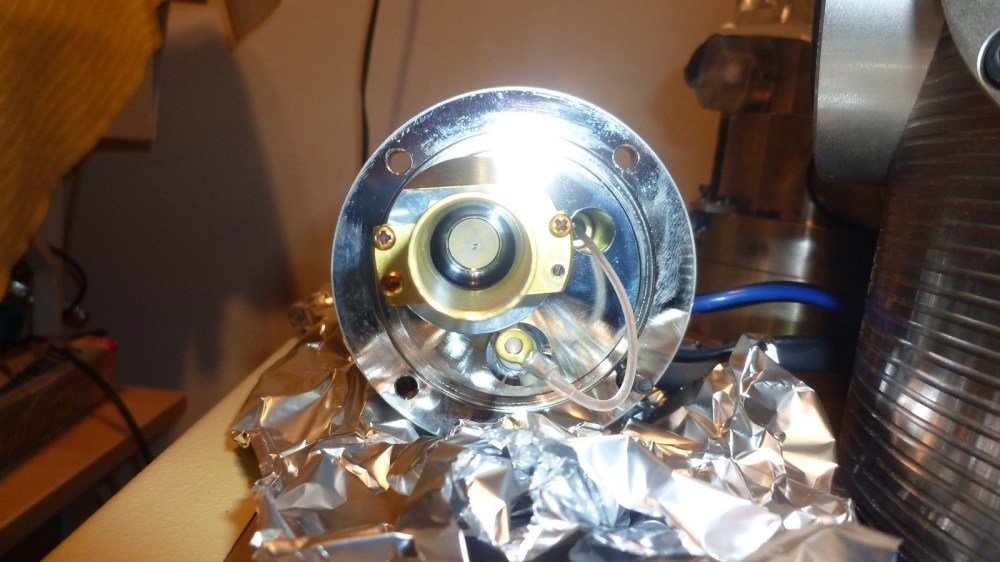
So the task wasn’t really hard. I just had to unscrew the faraday cage (a pipe in this case) and the corona ring which holds the scintillator.
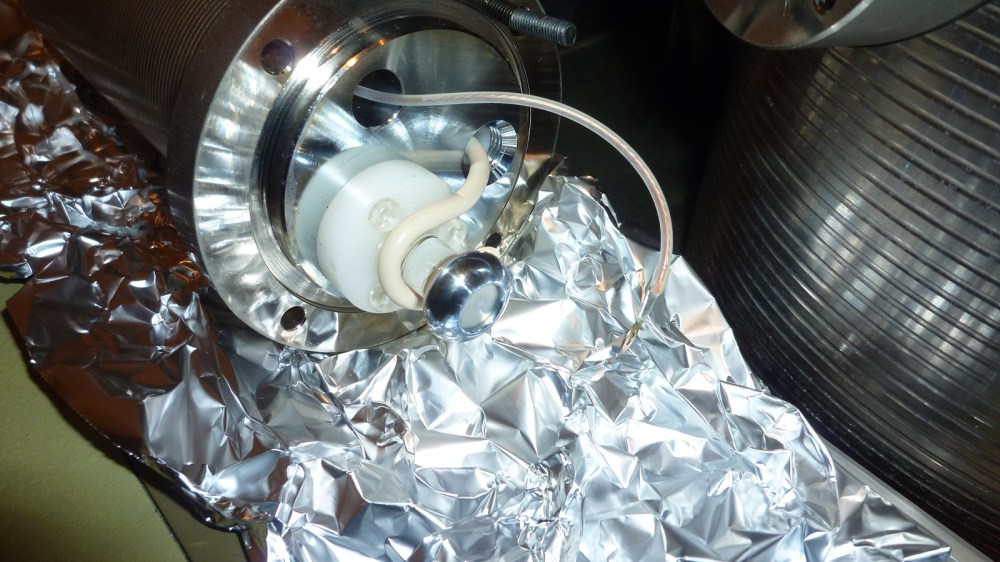
After cleaning all the parts (not the light pipe!) with pure acetone and replacing the old scintillator with a new shiny one, the image improved drastically!
I also took the chance to load a newly plasma sputtered Diatoms/Radiolarians mix sample, which I made in my still work-in-progress magnetron sputter. It seems metallization (copper) worked just fine and I can say I’m very satisfied with the early results of both Uncle SEM and sputter coater.
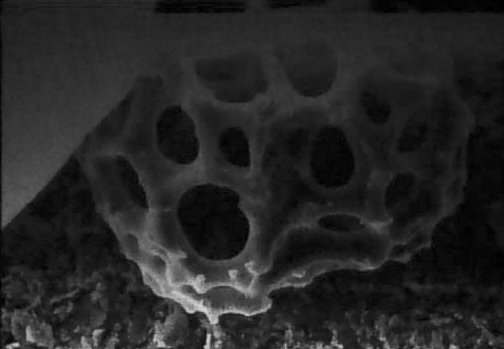
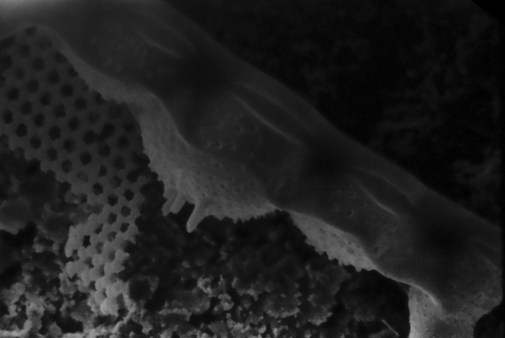
Images have been recorded from the phosphor screen as the raster passes from top to bottom, so the quality is not the best…… yet. I’m working on an analog/digital converter for the video signal which should allow me to connect the SEM to a computer via USB and record digital images.
I’m following Ben Krasnow’s project, which you can see here, on his Applied Science Youtube channel. We got very similar SEMs, so I guess I’ll get it to work on mine too!
 Need for Science